
Why Raj Green Is Popular & Where It Works Best
What Is Raj Green?
Origin and composition
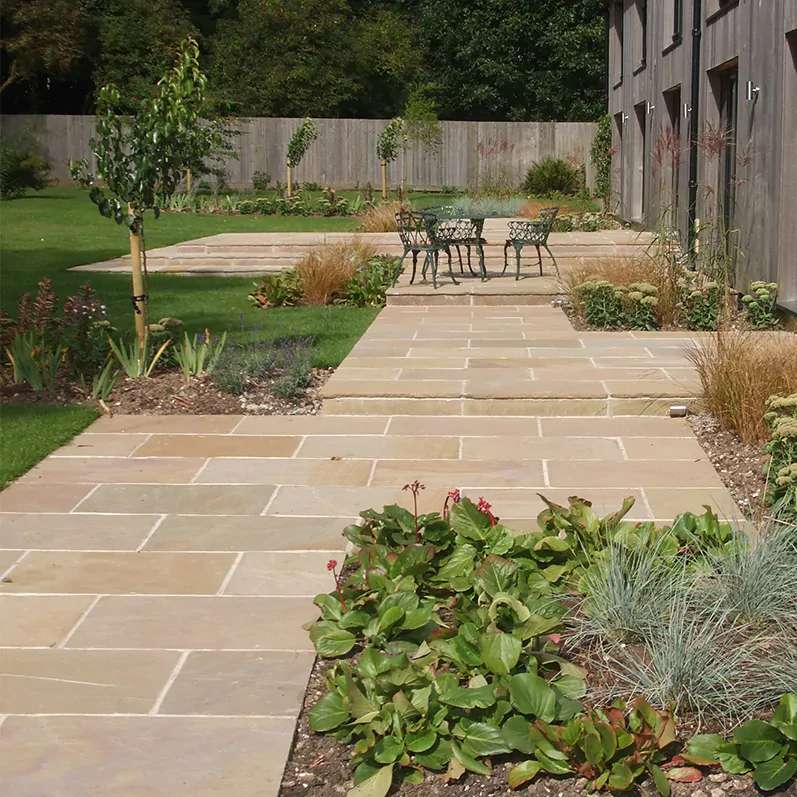
Raj Green is a type of Indian sandstone paving sourced predominantly from the Rajasthan region. Its durability, versatility, and character make it one of the most widely used materials in British landscaping. The stone features a dense structure that holds up well in all weather, resisting frost and surface wear when installed correctly.
Natural tones and colour blend
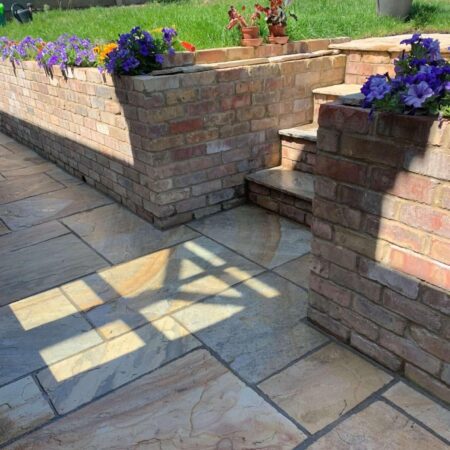
What sets Raj Green apart is its subtle mix of earthy tones—olive, green, grey, and brown—that create a warm, weathered aesthetic. These colours blend seamlessly into both urban and rural environments, especially where a traditional look is preferred. Its varied colouration also makes it more forgiving with day-to-day dirt, making it practical as well as attractive.
How it compares to other sandstones
Compared to lighter or more monotone options, Raj Green offers more character without overwhelming a space. While Buff or Mint sandstone can brighten a space, Raj Green brings warmth and depth. It’s also less prone to discolouration than softer stones, providing a long-term visual benefit.
Why Raj Green Porcelain Has Gained Popularity
Visual appeal vs natural sandstone
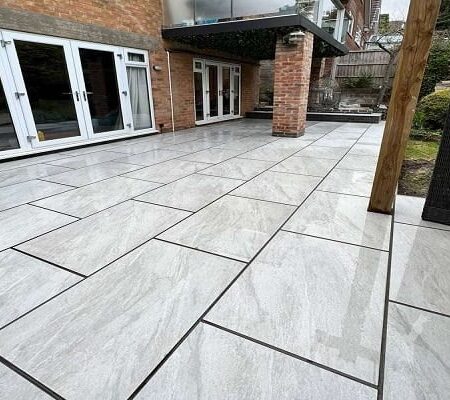
Raj Green porcelain slabs mimic the appearance of traditional sandstone with remarkable accuracy. This allows for a seamless look, especially in settings where consistency and ease of maintenance are key. The printed surface gives the impression of natural variation while maintaining uniformity between slabs.
Durability and performance in British weather
Unlike natural stone, which can absorb water and develop algae, Raj Green porcelain is virtually non-porous. This makes it resistant to frost damage and less likely to stain. Its surface is also less prone to scratching, which matters in high-traffic areas.
Low-maintenance surface qualities
Natural sandstone typically requires sealing and more frequent upkeep to retain its colour and prevent moss growth. Porcelain slabs offer an alternative with far lower maintenance demands. No sealing is needed, and routine cleaning is usually sufficient to maintain their appearance, even during winter.
Raj Green Indian Sandstone Paving Slabs – A Classic Favourite
Ideal for traditional and period homes
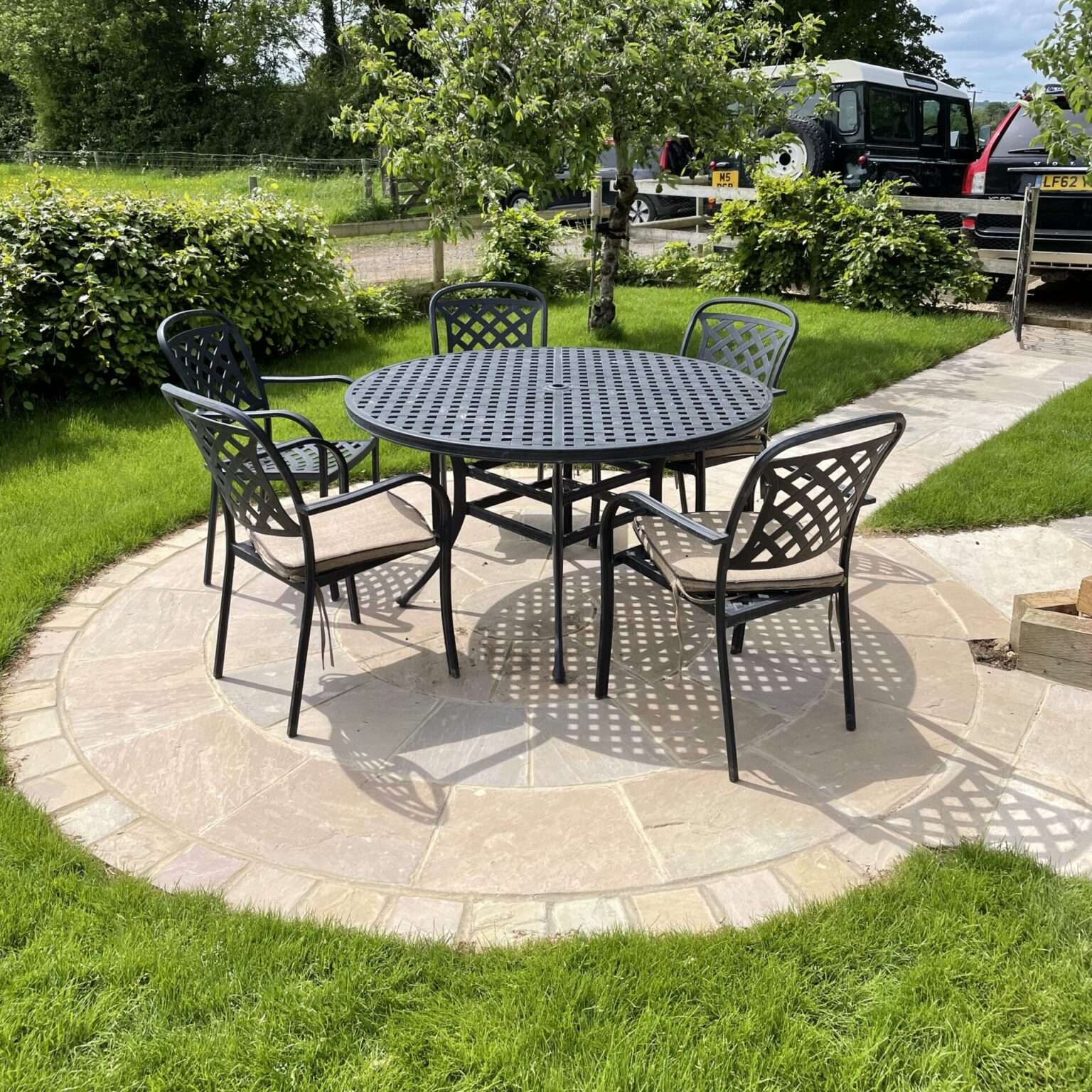
Raj Green Indian sandstone paving slabs are especially popular in cottage gardens, farmhouses, and period properties. The subtle colouring works well with red brick, timber-framed buildings, and older stone walls. Their slightly riven surface provides a natural texture that enhances this rustic charm.
Slip resistance and longevity
The texture of natural sandstone offers strong grip, even in wet conditions, making it a safe option for patios and pathways. With correct installation and periodic maintenance, these slabs can last for decades without needing replacement.
How sealing enhances colour
While Raj Green sandstone naturally weathers over time, sealing the surface can help retain its original colours. Sealants also help prevent staining from leaves, food, or garden debris. Many homeowners opt for a sealant with a colour enhancer to deepen the stone’s tones, especially in shaded areas.
Where Raj Green Works Best
Garden patios
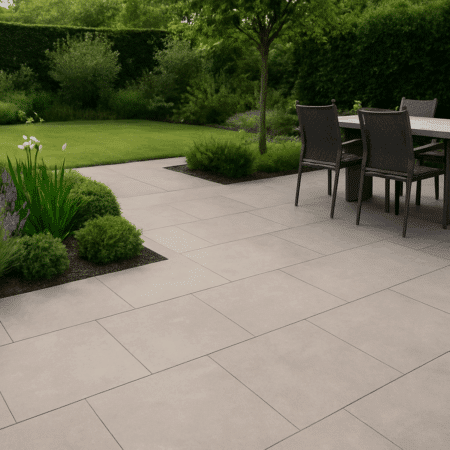
Raj Green is a strong contender for garden patios, especially in homes that aim for a classic or cottage-inspired aesthetic. Its rich blend of tones brings warmth and structure to outdoor living spaces, particularly when paired with soft planting or timber furniture. When laid in a traditional pattern, it suits curved or irregular patio designs.
Pathways and edging
For garden paths, Raj Green offers a firm surface underfoot and a pleasing, natural look that blends well with lawns, flower beds, and gravel. Narrower cuts can be used for edging borders or framing other stone types, giving definition without stark contrast. The stone’s tactile quality makes it a pleasant surface to walk on in bare feet during summer.
Courtyards and formal layouts
In courtyard settings, Raj Green helps strike a balance between rustic charm and formal structure. When cut into uniform rectangles or squares, it lends itself well to linear layouts. The variation in tone ensures that even symmetrical designs don’t look sterile, while its weather-resistant nature makes it suitable for enclosed spaces with limited drainage.
Matching Raj Green with Other Colours and Materials
Combining with Kandla Grey Porcelain Paving
A pairing that has grown in popularity is Raj Green with Kandla Grey porcelain paving. The cool grey tones of Kandla Grey offer a clean, modern contrast to the warm, earthy hues of Raj Green. This combination works particularly well in tiered gardens or spaces that require visual zoning. It also helps break up large paved areas without clashing.
Using contrasting edging or borders
Raj Green works beautifully when framed with darker setts or borders—like charcoal or black limestone. These accents help define the space, especially around lawns or planted areas. Borders can also serve practical purposes, such as containing gravel or mulch.
Blending with gravel, brick, or cladding
Because Raj Green carries both warm and cool undertones, it matches well with a range of external finishes. It looks natural next to reclaimed brick, aged timber, and neutral gravel. This makes it easier to integrate into existing landscapes or architectural styles without requiring a full redesign.
Raj Green or Porcelain Slabs – Which to Choose?
Differences in appearance
Both Raj Green sandstone and its porcelain alternative replicate a similar colour palette, but the finish is noticeably different. Natural stone has inherent texture and unpredictability in shading. Porcelain slabs, on the other hand, offer uniformity. Depending on the setting, one may suit better than the other—period properties typically favour natural sandstone, while contemporary builds lean toward porcelain.
Cost considerations
Natural sandstone is generally more affordable per square metre, although installation and sealing may add to the overall cost. Porcelain slabs often come at a higher upfront price, but with lower maintenance expenses over time. For projects with tight budgets, sandstone offers strong visual results without compromising quality.
Long-term maintenance and use
For those wanting low-maintenance solutions, porcelain slabs are more resistant to stains, fading, and algae growth. Natural Raj Green requires a little more attention, particularly in shaded or damp areas. However, many prefer the weathered patina that sandstone develops, which porcelain cannot replicate authentically.
Final Thoughts on Choosing Raj Green for Outdoor Projects
Patio slab applications
Raj Green performs particularly well as a patio slab thanks to its robust structure and slip resistance. Its varied finish makes it an excellent choice for spaces with heavy footfall, furniture, or family activity. Whether used in a traditional layout or a more modern cut, the stone gives depth and character to open outdoor areas.
Long-term visual impact
The natural tones of Raj Green tend to mellow with age, often improving in appearance as the stone weathers. This ageing process is part of its charm and suits those looking to build spaces that evolve naturally over time. For those who prefer a consistent finish, Raj Green porcelain delivers a stable appearance while keeping the same colour profile.
Installation advice and care tips
Proper installation is key to the longevity of any paving, especially sandstone. A solid sub-base, correct pointing compound, and drainage planning will help prevent movement or discolouration. Sealing Raj Green can extend its colour life and help prevent moss build-up in damp areas. Routine sweeping and occasional power washing should be enough to keep it in good condition.
Both porcelain and natural Raj Green offer distinct advantages, but suitability depends on the setting and desired look. For those who want the warm tones of natural stone without the maintenance, Raj Green Porcelain provides a strong alternative. For others, the appeal of traditional texture and aged charm still holds strong with raj green indian sandstone paving slabs.

0 comments on “Why Raj Green Is Popular & Where It Works Best”