
How to Clean Sandstone Paving Slabs?
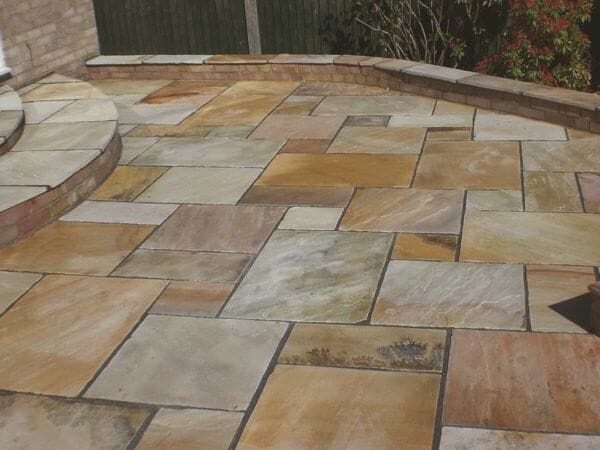
Keeping sandstone paving clean helps preserve its natural beauty, colour, and surface texture. Whether it’s Indian sandstone, Raj Green, or grey slabs, the right method makes a noticeable difference. The guide below walks through effective, safe techniques for cleaning without damaging the surface.
Understanding Sandstone Paving
What Are Sandstone Paving Slabs Made Of?
Sandstone is a sedimentary rock, formed by layers of compacted sand and minerals over time. It features natural tonal variations and texture, making it ideal for garden paths, patios, and driveways. Sandstone paving slabs are cut from large blocks, usually with a riven or smooth finish depending on the style.
Why Sandstone Is Popular in UK Gardens
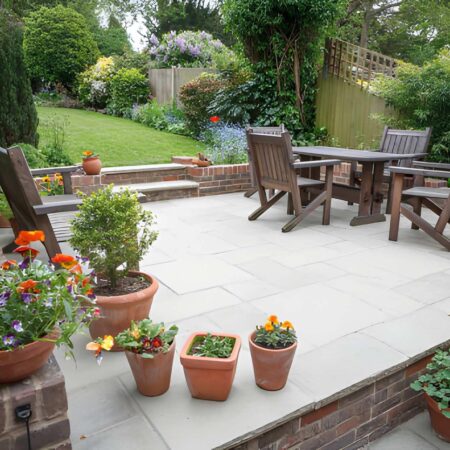
Homeowners and landscapers choose sandstone because of its character and versatility. It blends easily with traditional and contemporary designs, especially in rural or suburban settings. Its porous nature makes it breathable, but also means it can absorb dirt and moisture if left untreated.
The Appeal of Indian Sandstone Paving
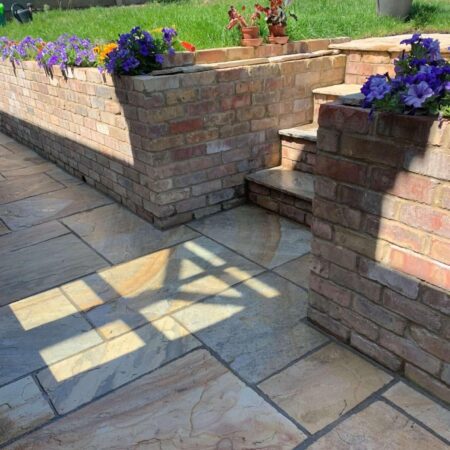
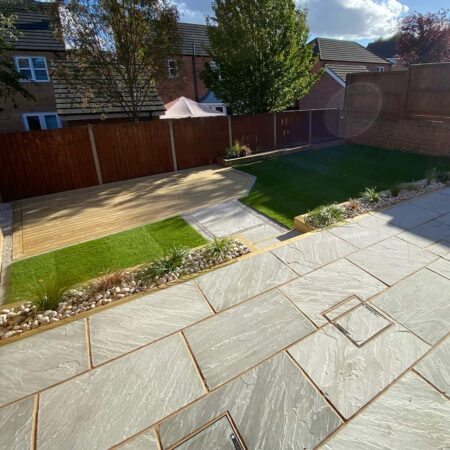
Indian sandstone pavingoffers subtle colour palettes, durability, and affordability. It’s quarried from regions like Rajasthan and is available in shades like beige, brown, grey, and green. The surface variation gives each slab a unique appearance, which is part of its charm.
Common Issues with Dirty Paving Slabs
What Causes Stains and Discolouration?
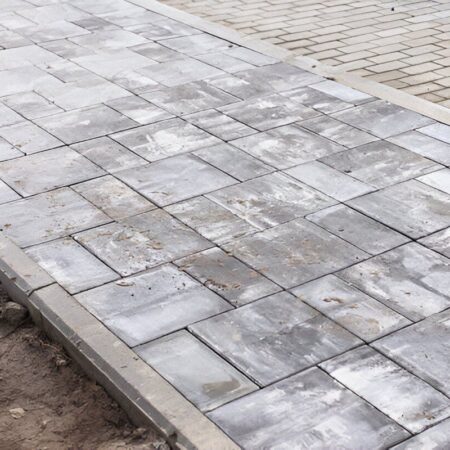
Outdoor paving slabs face exposure to air pollution, garden debris, weather conditions, and foot traffic. These factors cause dirt to accumulate over time. Damp climates also encourage biological growth, which can stain the surface.
The Impact of Algae, Moss, and Lichen
When slabs are shaded or damp for long periods, moss and algae can take hold. These make the surface slippery and unsightly. Lichen, in particular, can leave tough marks that don’t lift with basic cleaning.
Surface Damage from Incorrect Cleaning Methods
Some cleaners use harsh chemicals or wire brushes that damage the surface. Acid-based solutions can strip colour from natural stone, especially in pale finishes. Without the right care, cleaning attempts can leave permanent marks.
Preparing to Clean Sandstone Paving
Tools and Materials Needed
Before starting, it’s important to gather everything in one go. A stiff broom, bucket, washing-up liquid or pH-neutral cleaner, soft brush, hosepipe or watering can, and protective gloves are usually enough. For tougher stains, some prefer white vinegar or specialist stone cleaner.
Safety Precautions to Consider
Natural stone is prone to damage if exposed to unsuitable substances. It’s best to avoid bleach, acid-based cleaners, or DIY mixes that haven’t been tested. Gloves protect skin from irritation, while eye protection is helpful when dealing with any liquid treatments.
When Is the Best Time to Clean Paving Slabs?
Warmer, dry weather works best. Cleaning on a dry day allows surfaces to dry quickly and helps spot problem areas without puddles getting in the way. Spring and early summer are ideal times to include cleaning in regular maintenance.
Step-by-Step: How to Clean Indian Sandstone
Sweeping and Removing Loose Debris
Start with a dry sweep using a stiff broom to remove dirt, leaves, and any surface moss. Pay extra attention to joints between slabs, where organic matter tends to build up. This initial step prevents surface scratches during wet cleaning.
Using Warm Water and Soap Solution
A simple mix of warm water and a few drops of washing-up liquid is often enough. Pour it across the surface and use a soft-bristled brush to scrub in circular motions. Work in manageable sections, especially if the area is large, to avoid water drying too quickly.
Cleaning with White Vinegar or Baking Soda
If stains persist, a diluted white vinegar solution can help, though it should be tested on a small corner first. Mix one part vinegar to one part water, apply sparingly, and rinse well afterwards. Baking soda can also be sprinkled on damp patches to lift oily or organic marks.
Avoid vinegar on newly laid paving or if the slabs are sealed, as the acid may react with certain stone sealants or grouts.
Rinsing Techniques That Avoid Surface Damage
Use a garden hose or watering can with steady pressure to rinse thoroughly. Avoid high-pressure sprays unless you’re confident the slabs are unsealed and not fragile. The goal is to remove all soapy residue without eroding the joints or lifting sealant.
When to Use a Pressure Washer (and When Not To
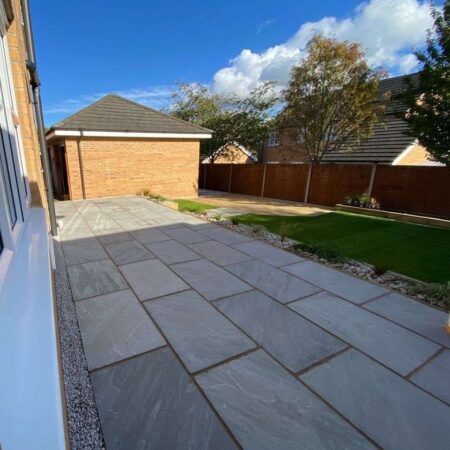
A pressure washer can be effective, but it must be used with caution. Keep the nozzle at least 30cm away from the surface and use a wide spray fan. On textured surfaces likegrey Indian sandstone, pressure washing should only be occasional. Overuse can cause surface thinning or discolouration.
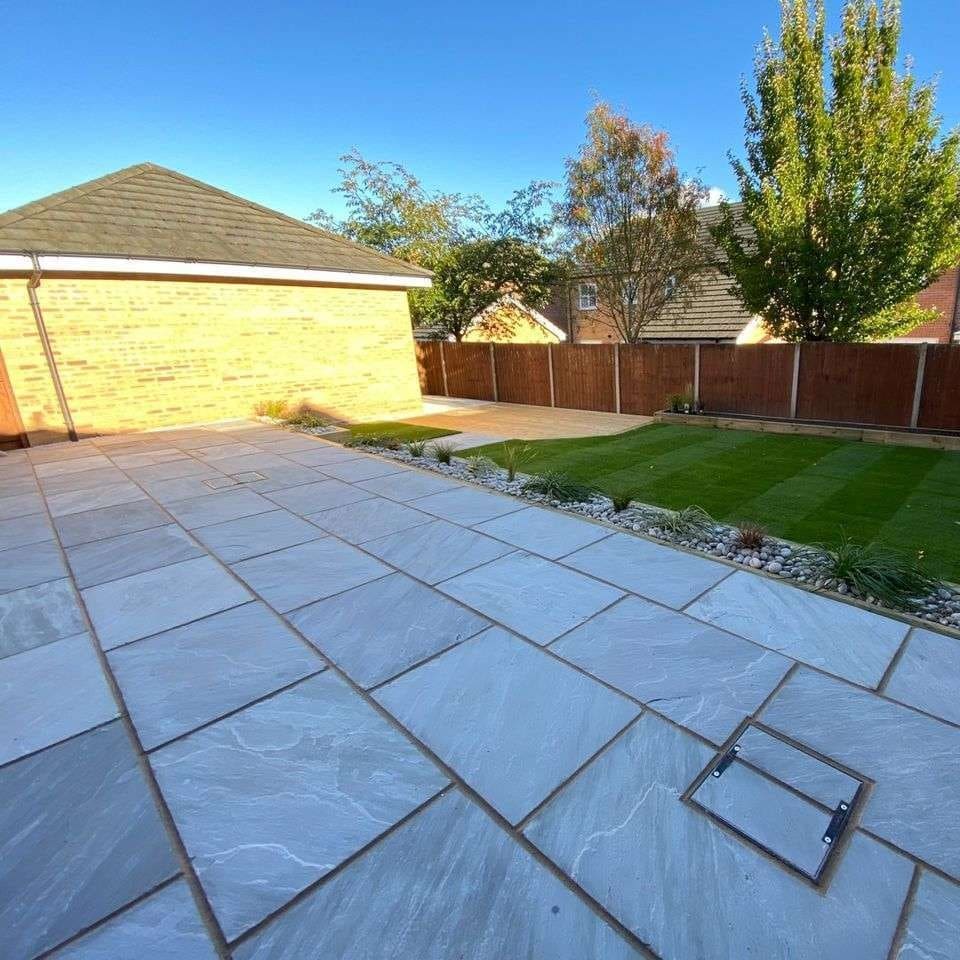
Dealing with Tough Stains on Grey Indian Sandstone
Removing Rust Marks or BBQ Grease
Rust stains often come from garden furniture or BBQ frames. Specialist rust removers designed for natural stone are the safest bet. For grease stains, absorbent materials like talcum powder can be left overnight and brushed away before cleaning with soap and water.
Treating Organic Stains like Bird Droppings
These should be removed quickly to prevent etching. A damp sponge and pH-neutral cleaner work well. Avoid aggressive scrubbing as it may push the stain deeper into the porous surface.
Spot-Cleaning vs Full Surface Washing
In most cases, spot-cleaning is enough. Repeated full-surface washing, especially with high pressure, risks long-term damage. It’s better to treat only where needed, particularly on shaded corners or under plants where growth and marks are common.
Caring for Raj Green Indian Sandstone After Cleaning
How to Avoid Future Staining
Routine sweeping and prompt stain removal keep slabs looking clean for longer. Avoid dragging metal or plastic furniture across the surface, and use planters with feet to prevent water pooling.
The Role of Sealants and Grout Maintenance
Applying a breathable sealant helps repel moisture and prevents stains from sinking in. Choose products made for Indian sandstone to avoid altering the colour or texture. Re-grouting loose joints prevents water from seeping underneath, which can cause long-term damage.
Frequency of Cleaning for Long-Term Appearance
A full clean twice a year is usually enough. Quick spot-cleans throughout the year help maintain the overall look. Grey Indian sandstone may need more attention in winter due to its lighter tone, which can show grime more easily.
Mistakes to Avoid When Cleaning Paving Slabs
Harsh Chemicals and Their Effects
Some off-the-shelf cleaners contain acids or bleach, which can erode natural stone surfaces or cause permanent discolouration. These products might work well on concrete, but sandstone is more porous and chemically sensitive. Avoid anything that doesn’t specifically state it’s suitable for Indian sandstone paving.
Pressure Washing Without Care
A common mistake is using a pressure washer on full power, too close to the surface. This can lift the top layer of stone, create streaks, or damage jointing compounds. If pressure washing is absolutely necessary, use a low setting and hold the wand at an angle to reduce direct impact.
Ignoring Manufacturer Guidelines
Some suppliers provide care instructions specific to the stone batch. These may include recommendations on cleaning agents, sealant types, and maintenance frequency. Skipping this guidance risks voiding warranties or causing preventable damage.
Final Thoughts on Maintaining Indian Sandstone Paving
Cleaning as Part of Routine Garden Maintenance
Sandstone paving, especially Indian varieties like Raj Green and Grey Indian Sandstone, responds well to regular attention. Cleaning doesn’t always require professional tools or chemicals; most stains lift easily with the right method and some patience. Keeping the surface free of debris, combined with light scrubbing, can prevent long-term build-up.
When to Call in a Professional Cleaner
If stains remain after multiple attempts or if the surface appears patchy, a specialist may be needed. Professionals use tailored products and equipment designed for stone without causing surface damage. This can be especially useful for olderpaving slabsor when restoring the appearance of a larger area.
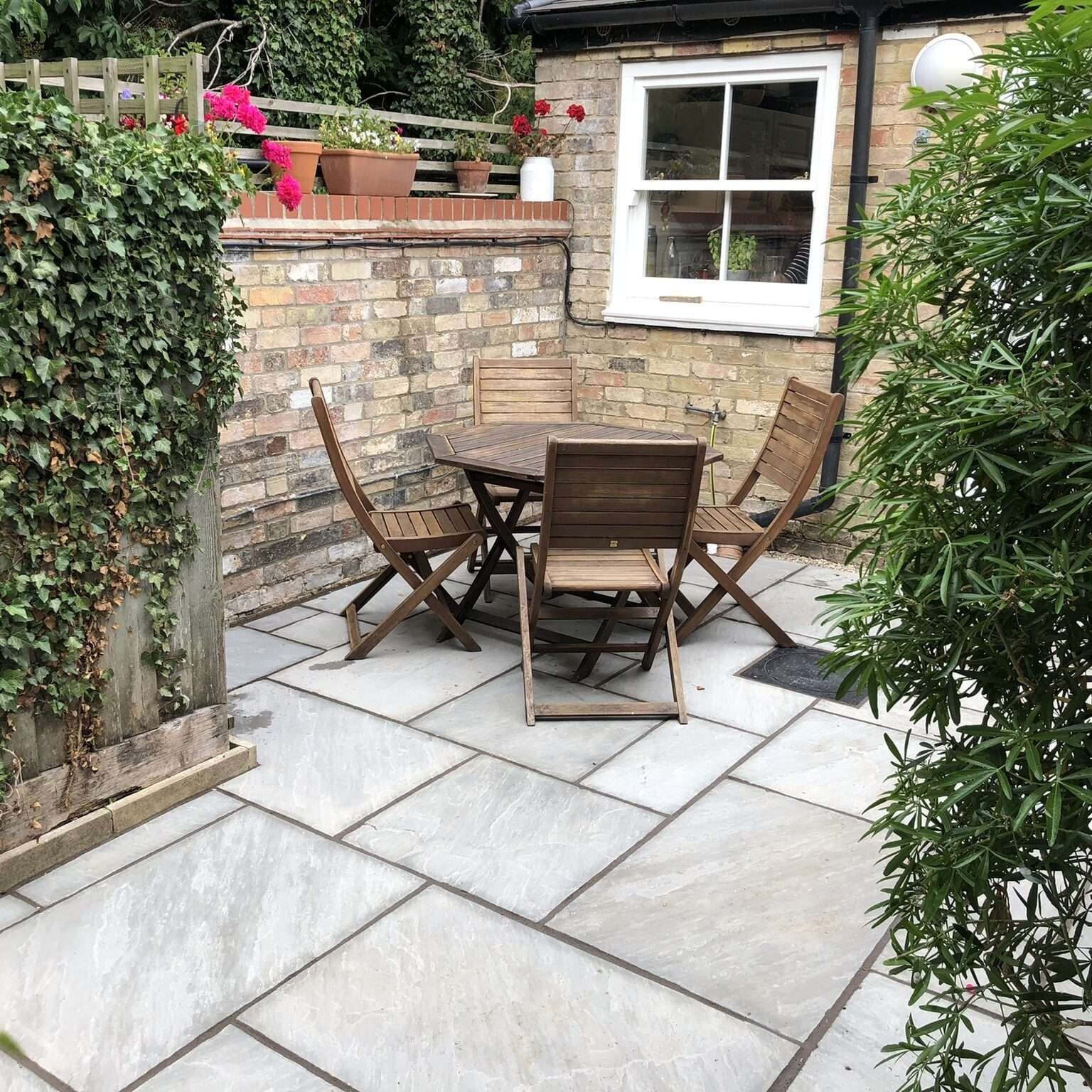
By cleaning sandstone paving slabs correctly, their original colours and textures remain visible year-round. Whether the goal is preserving the soft greens ofRaj Green Indian Sandstoneor maintaining the clean lines of a Grey Indian Sandstone patio, the right techniques make the difference between dull and vibrant stone.

0 comments on “How to Clean Sandstone Paving Slabs?”