
The Elegance and Longevity of Porcelain Paving Slabs
Why Homeowners and Landscapers Choose Porcelain
What Sets Porcelain Apart from Natural Stone
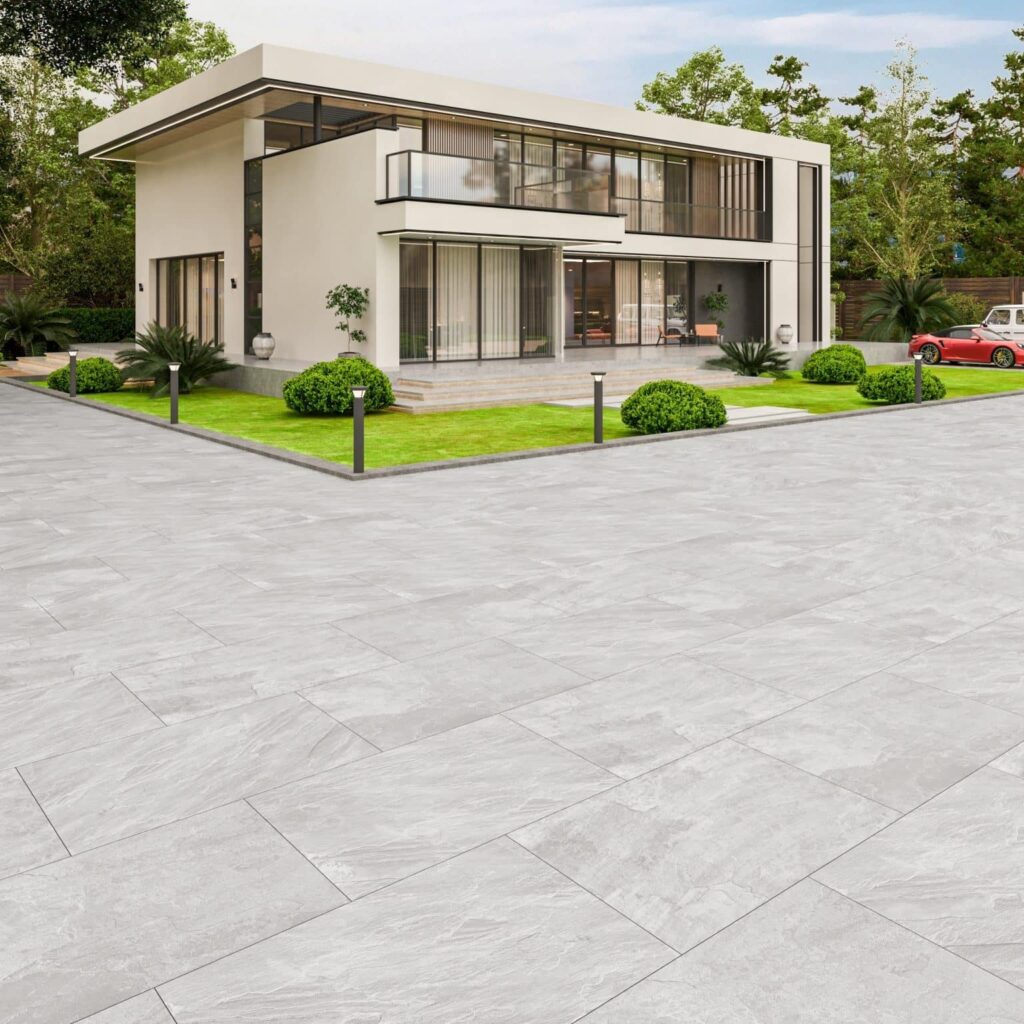
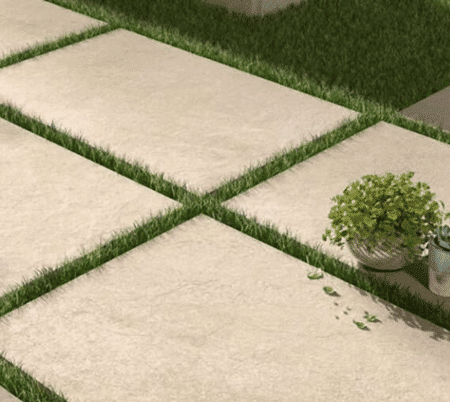
Porcelain paving has grown into a preferred choice across the UK, with its clean lines, high density, and elegant finish outperforming many natural stone alternatives. Manufactured under extreme heat, each slab delivers uniform strength and precision sizing. This results in minimal variation and cleaner jointing, which can be especially valuable when creating sharp, modern layouts.
Natural stones like sandstone or limestone offer organic charm, but porcelain offers a practical edge that’s hard to ignore. It resists fading, scratching, and chipping, making it ideal for high-traffic areas or spaces with garden furniture.
Slip Resistance and Low Water Absorption
A standout feature of porcelain paving slabs is their low porosity. With a water absorption rate often under 0.5%, these slabs won’t soak up moisture the way traditional stone can. This minimises the risks of frost damage in colder months, helping patios and walkways maintain their structure year-round.
In addition, most exterior-grade porcelain is finished with a textured or anti-slip surface. This makes it a safer choice in damp or shaded areas, particularly for families with children or pets. Whether installed beside a pool, along a garden path, or on a raised terrace, the surface stays grippy even after rain.
Colour Consistency and UV Resistance
Where natural stone can vary widely between cuts, porcelain offers visual consistency across the entire batch. Colours are digitally printed onto the surface before firing, meaning a sleek grey, soft cream, or deep black will maintain its original hue, even after years in direct sunlight.
This makes porcelain an excellent choice for anyone aiming for symmetry or seamless tiling. There’s no need to mix and match or worry about patchy weathering. It also ensures compatibility with existing landscaping features like rendered walls, planters, or pergolas.
Durability That Withstands UK Weather
Frost-Proof, Fade-Resistant, and Stain-Repellent Properties
One of porcelain’s greatest strengths lies in its resistance to weathering. Frost, UV rays, and wet winters have little impact on its integrity. Slabs won’t warp or become brittle over time, and the surface resists surface stains from leaves, grease, or muddy boots. A quick rinse often clears away most garden debris without the need for pressure washing or harsh chemicals.
Low Maintenance Without Compromising Aesthetic
The surface of porcelain paving doesn’t absorb grime or algae in the same way sandstone or concrete might. This means it won’t discolour quickly or require regular scrubbing. Occasional sweeping, paired with mild soapy water, is usually enough to keep the slabs looking fresh.
For households that want outdoor beauty without constant upkeep, this balance of function and form gives porcelain a clear advantage. Its low-maintenance nature appeals to anyone who wants to enjoy their garden, not clean it every weekend.
Suitable for Gardens, Patios, Driveways, and Pathways
While porcelain is often associated with patios, its strength makes it suitable for a variety of outdoor spaces. Thicker versions are commonly used in driveways or heavy-use areas, offering reliable support without cracking or shifting.
Walkways benefit from porcelain’s slip resistance and clean edge, while gardens gain texture and contrast through clever placement of stepping stones or feature slabs. It offers the versatility to serve both structural and decorative purposes, without compromise.
Design Flexibility with Colour and Texture
Smooth vs Textured Finishes
Porcelain paving slabs come in a range of finishes, from silky-smooth matt textures to structured, stone-effect surfaces. Smooth tiles suit contemporary garden spaces and covered areas where minimalism takes centre stage. Textured slabs, by contrast, provide grip and visual depth, ideal for open patios or multi-level landscaping.
Each finish serves both an aesthetic and practical purpose, allowing designers and homeowners to tailor the surface feel to the space’s needs. Whether framing a firepit area or creating a slip-resistant entryway, the right finish makes a noticeable difference.
Modern, Rustic, and Traditional Style Options
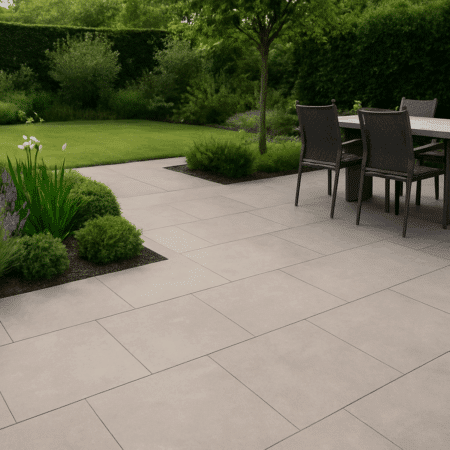
Design preferences vary, and porcelain makes it easier to match any setting. For modern exteriors, large-format slabs in pale greys or charcoal tones create clean geometry and open up the space visually. For rustic or traditional gardens, wood-effect or riven-style porcelain mimics natural materials without the drawbacks of splintering or decay.
Colour choices remain vast. Soft beige, cream, slate, and silver all sit comfortably within contemporary design schemes, while warmer tones allow for coordination with brickwork, timber structures, and classic landscaping themes.
Coordinating with Other Exterior Features
Beyond flooring, porcelain can be paired with complementary materials across a property. Wall cladding, step kits, edging stones, and copings often come in matching or contrasting porcelain designs, ensuring visual continuity from one zone to the next.
This flexibility makes it easier to create cohesive outdoor layouts, whether blending with fencing, raised beds, or garden furniture. Porcelain’s consistency and colourfast properties mean what’s installed today will still look fresh in five years.
Popular Choices in the UK Market
Kandla Grey Porcelain Paving: Understated and Contemporary
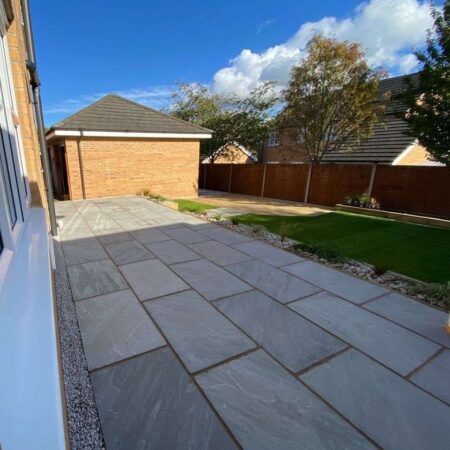
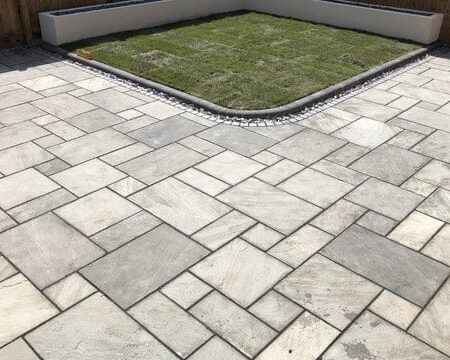
Kandla Grey Porcelain Paving is a popular option for those seeking a subtle, modern aesthetic. Inspired by the natural tones of Indian sandstone but engineered for strength and uniformity, this style offers muted grey shades that pair well with minimalist garden designs. It works especially well in large, open patios where clean lines and neutral tones are key.
Its consistent surface and edge profile make it easy to install in a grid or staggered pattern, offering both visual impact and straightforward application for landscapers.
Raj Green Porcelain: Warmth for Traditional Gardens
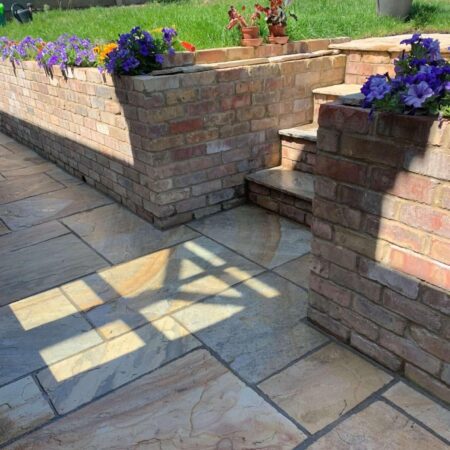
Raj Green Porcelain retains the earthy tones of its sandstone counterpart while delivering the enhanced performance of porcelain. The blend of green, brown, and buff shades adds warmth and texture to period homes, country-style gardens, and classic terraces.
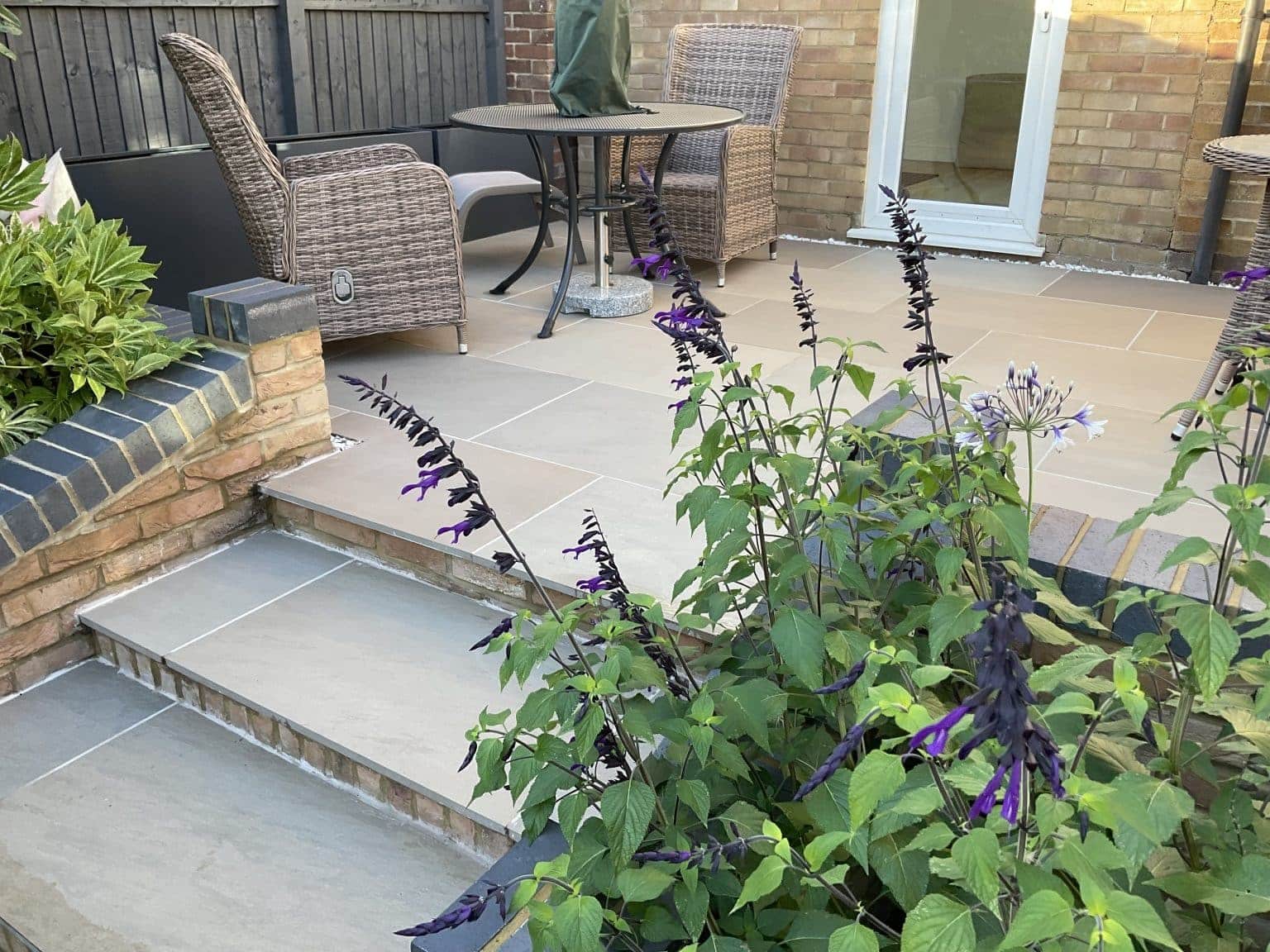
While it reflects the charm of hand-cut stone, the surface is easier to clean, less porous, and better equipped for UK winters. It bridges the gap between rustic style and long-term practicality.
Black Porcelain Slabs: Bold Contrast and Minimalist Appeal
Black porcelain slabs provide a striking foundation for contemporary outdoor spaces. Their deep colour enhances contrast when paired with white rendered walls, light-coloured furniture, or lush planting schemes. The finish is typically matt, with a gentle texture for added grip and surface interest.
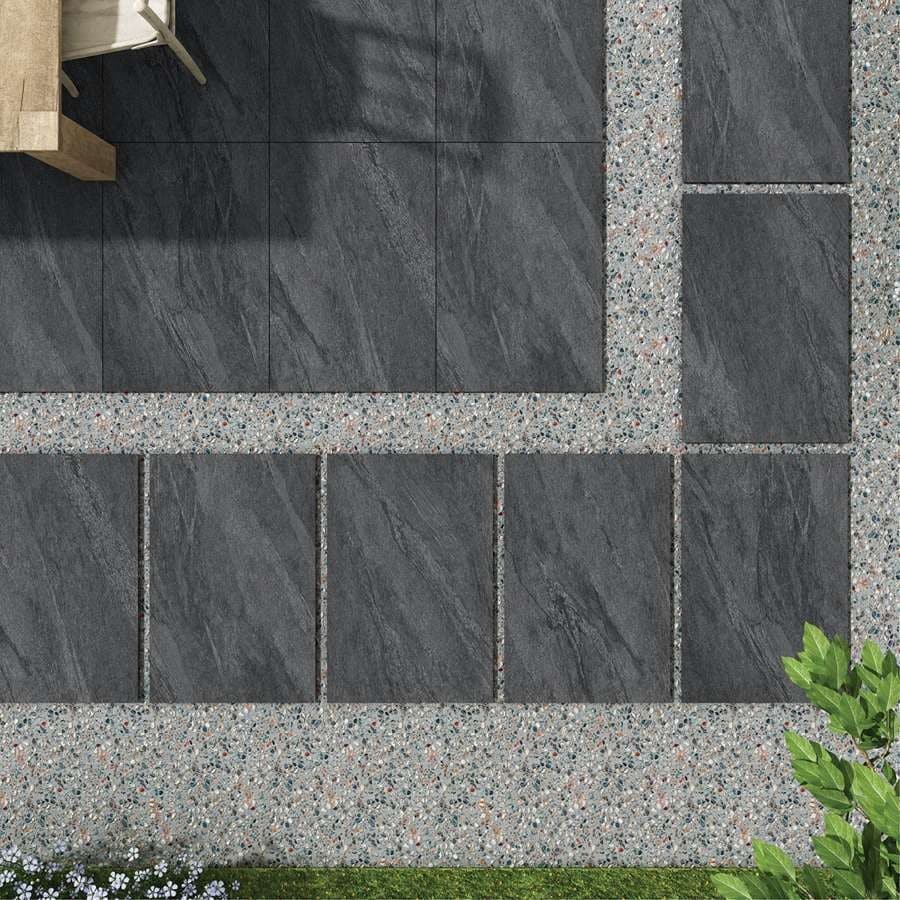
This option suits small courtyards and large terraces alike, delivering modernity without overwhelming the space. The richness of the colour also helps hide day-to-day grime, making maintenance even easier.
Practical Benefits Beyond Aesthetics
Algae, Moss, and Weed Resistance
Porcelain paving is engineered to be resistant to biological growths that commonly affect outdoor surfaces. Thanks to its dense structure and low porosity, there’s minimal chance for algae or moss to take hold. Unlike concrete or traditional stone, porcelain doesn’t absorb moisture that fosters growth, even in shaded or damp areas.
This resistance not only keeps the surface looking clean but also reduces slip risk in the colder months. It’s especially useful in shaded gardens or properties surrounded by trees.
No Need for Sealants or Intensive Cleaning
With many paving types, sealing is necessary to prevent water penetration, surface staining, or colour fading. Porcelain avoids that hassle entirely. The baked-on glaze forms a barrier that doesn’t require added protection, saving time and long-term costs.
This benefit extends to daily upkeep. Mud, leaves, and even food spills can be washed away with nothing more than a garden hose and mild soap. It’s a solution that offers the look of high-end paving without the labour that often comes with it.
Family and Pet-Friendly Surfaces
The anti-slip nature of outdoor porcelain paving makes it safer for children and pets. Rougher finishes offer additional grip, even when wet. Rounded corners and consistent slab sizing also reduce tripping hazards.
For pets, porcelain doesn’t hold odours, doesn’t stain easily, and remains cooler underfoot in summer compared to dark concrete or stone. It’s a practical choice for busy homes where outdoor spaces double as play areas or pet zones.
Indoor to Outdoor Continuity
How Porcelain Bridges Interior and Exterior Spaces
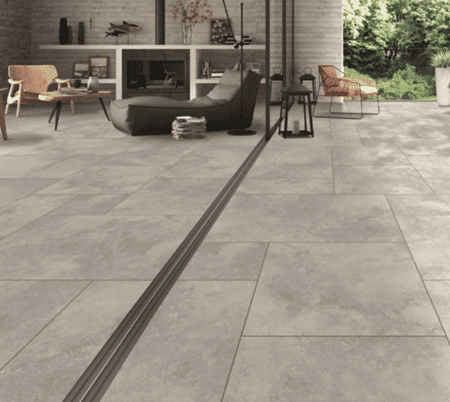
Porcelain’s availability in a range of thicknesses and finishes allows for seamless design across indoor and outdoor zones. Coordinating kitchen floors with matching patio slabs can make smaller homes feel larger and more unified. This flow is particularly effective with bi-fold or sliding doors that open out onto garden spaces.
The consistent appearance and durability of porcelain mean it handles foot traffic well, from interior hallways to external pathways, without creating jarring transitions between zones.
Using Matching Slabs for Kitchens, Conservatories, and Patios
When planning multi-surface installations, having one material that works in both internal and external environments is a considerable advantage. Porcelain provides that bridge. Tiles used in kitchens, conservatories, or utility rooms can be matched with outdoor paving slabs from the same range, making it possible to create a continuous aesthetic.
This cohesion works well for entertaining spaces, where guests can move from indoor dining areas to patios or garden lounges without stepping onto different materials.
Where to Buy Porcelain Slabs for Shower Walls
The same qualities that make porcelain suitable for patios also apply to bathroom environments. Its low porosity, mould resistance, and easy-clean surface make it ideal for wet areas, including shower walls.
Those searching for where to buy porcelain slabs for shower walls should look to suppliers offering both internal and external tile options. Reputable paving merchants that specialise in porcelain ranges often provide matching wall tiles in smaller formats. This ensures consistency in both colour and finish, whether used behind a rainfall shower or to tile a bathroom floor.
Laying and Installation Guidance
Porcelain Laying Essentials: Base, Spacing, and Jointing
Installing porcelain paving requires care and attention to detail, particularly due to the slabs’ density and smooth underside. A solid, compacted sub-base is critical. Each slab should be fully bedded into a mortar layer, avoiding spot-bedding to prevent movement or breakage over time.
Unlike some natural stone options, porcelain does not allow water to pass through. This makes it essential to build adequate drainage and fall. A minimum joint width of 5mm is typically recommended, allowing for weather changes and accommodating jointing compound securely.
The Importance of a Solid Sub-base and Primer Slurry
A well-prepared sub-base is essential for the long-term success of any porcelain installation. It should consist of MOT Type 1 hardcore, compacted in layers to create a stable foundation. On top of this, a full mortar bed provides even support.
Before laying, a slurry primer should be applied to the back of each slab. This step is not optional — it helps the porcelain bond properly with the bedding layer, preventing loosening or rocking in future. The high density of porcelain means it won’t grip mortar on its own, so a primer is essential for a long-lasting finish.
Grouting and Aftercare Tips
Once installed, porcelain paving should be left to set before grouting begins. Flexible jointing compounds work best, as they prevent cracking and can accommodate movement from temperature changes or ground shift. Most products can be applied with a squeegee and brushed into the joints, with excess rinsed off the surface before curing.
Post-installation care is minimal. Regular sweeping and occasional washing with warm soapy water are usually enough. Avoid harsh chemicals or acidic cleaners; they aren’t necessary and could compromise the finish. For driveways or high-use areas, a gentle pressure wash may be used occasionally, though always at a low setting to protect the grout lines.
Final Thoughts: A Long-Term Investment for Outdoor Living
Value Retention Over Time
Unlike materials that age quickly or require frequent resealing, porcelain paving holds its appearance and structural integrity with minimal effort. Its resistance to weather, stains, and scratches means it rarely needs replacing, and it doesn’t lose value visually.
Landscaping choices can influence resale appeal, especially when external spaces have been thoughtfully designed and finished with quality materials. Porcelain adds that polish.
Visual Appeal That Doesn’t Diminish
Years after installation, porcelain paving maintains its colour and surface finish. Where sandstone may fade or darken with moss, porcelain resists these effects without sacrificing character. It stays looking like new with very little input, making it ideal for homeowners who value longevity and ease.
Why Porcelain Remains a Top Choice Across the UK
The growing popularity of porcelain paving slabs reflects a shift in preference toward long-lasting, low-maintenance materials that don’t compromise on appearance. Whether installed in sleek city courtyards, suburban gardens, or rural terraces, porcelain delivers a professional finish that complements a wide range of architectural styles.
Its versatility, strength, and minimal upkeep position it as a leading option for anyone looking to improve their exterior spaces for today and the years ahead.

0 comments on “The Elegance and Longevity of Porcelain Paving Slabs”